Looking to implement an effective system for trending cleaning verification results? During a recent client audit, I discovered a simple yet powerful method worth sharing with the HACCP Mentor community. Let’s explore this practical approach to tracking and analyzing your cleaning verification data.
The Purpose of Trending
Trending cleaning verification results serves multiple critical purposes in food safety management. First and foremost, it’s a mandatory requirement for businesses seeking GFSI certification, demonstrating a commitment to systematic monitoring and continuous improvement. But beyond compliance, trending acts as an early warning system, helping you detect subtle changes in cleaning effectiveness before they escalate into serious food safety risks.
Benefits of trending
Trending cleaning verification data offers multiple strategic advantages for food businesses. Regular analysis helps identify patterns in cleaning effectiveness, allowing you to spot declining performance before it becomes a food safety issue. It enables better resource allocation by highlighting which areas or equipment consistently require more attention.
This data-driven approach also supports continuous improvement initiatives, helps validate cleaning procedures, and provides valuable documentation for audits. Additionally, trending can reveal training opportunities for cleaning staff and help optimize cleaning schedules based on historical performance data.
Examples of cleaning verification
Common cleaning verification activities include:
- Visual Inspection: Detailed examination of equipment surfaces, joints, and hard-to-reach areas for visible soil, residue, or foreign material
- ATP Testing: Using ATP swabs to detect the presence of organic matter and on surfaces
- Microbiological Testing: Environmental swabs or contact plates to assess microbial contamination levels
- Allergen Testing: Specific tests to verify the removal of allergenic materials after cleaning
- pH Testing: Verifying proper chemical removal by testing surface pH levels post-cleaning
These verification methods can be used individually or in combination, depending on your facility’s requirements and risk assessment.
Steps to Successful Trending
The key to successful trending is keeping the process straightforward and easy to implement. Here’s our recommended approach:
- Step 1: Perform post-cleaning inspection or/and
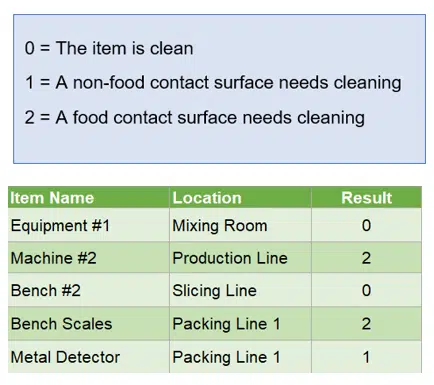
- Step 2: Assign cleanliness or success ranking
- Step 3: Document the results
Below is a simple ranking matrix with an example verification check based on post-cleaning inspection..

Best Practices for Visual Inspection Verification
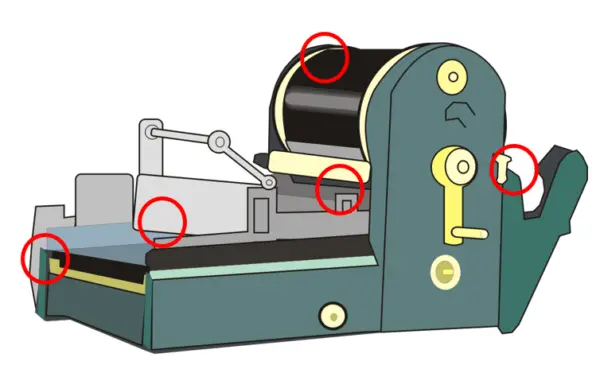
Tip: When verifying the cleanliness of a piece of machinery or equipment, look at individual points on the equipment or machine rather than the overall machine/equipment cleanliness.
Trend cleaning verification results
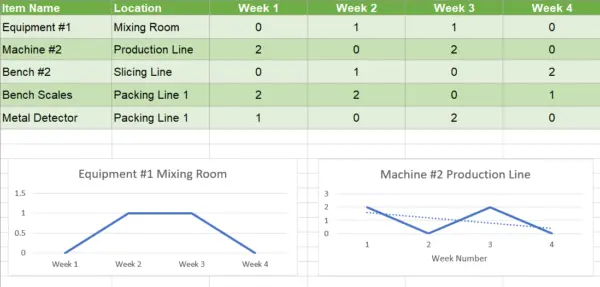
When it comes to recording and analyzing cleaning verification trends, consistency and accessibility are key. Whether you’re using a manual system or digital tools, your trending method should allow for easy data entry and quick visualization of results.
This enables your team to spot patterns, identify areas needing attention, and make data-driven decisions about your cleaning program’s effectiveness. For paper-based systems, transfer your results to a spreadsheet for visual trend analysis. Here’s how this might look:

If you use mobile records, the system should be able to generate a trending graph with a click of a button.
Final Thoughts
Implementing an effective trending system for cleaning verification doesn’t have to be complicated. By following the simple steps outlined in this guide, you can create a robust monitoring system that not only meets certification requirements but also provides valuable insights for your food safety program. Remember, the goal isn’t just to collect data – it’s to use that information to drive continuous improvement in your cleaning processes and maintain the highest standards of food safety.
Start small, be consistent with your documentation, and regularly review your trends. Whether you’re using paper-based records or digital solutions, the key is to make the process systematic and sustainable for your team. With time, you’ll find that trending becomes an invaluable tool for optimizing your cleaning program and preventing food safety issues before they occur.